

The Hidden Disadvantages of Paper Coffee Capsules and Coffee Balls
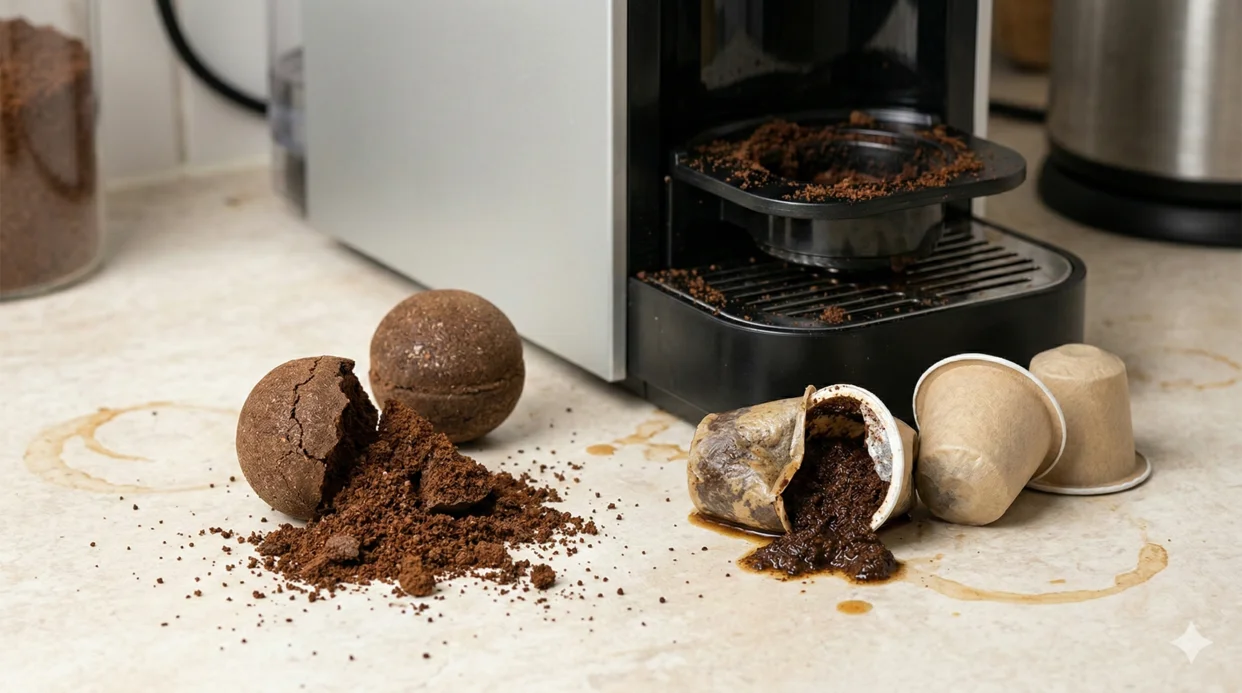
What Private Label Brands Must Know Before Switching Formats
Sustainability has become one of the defining forces shaping the global coffee capsule market. Retailers are demanding lower environmental impact. Consumers are scrutinizing packaging materials more closely than ever. Regulators are tightening standards around waste, recycling, and compostability. In response, new formats such as paper-based capsules and compressed coffee balls have emerged, positioned as environmentally progressive alternatives to traditional aluminum capsules.
At first glance, these innovations appear to offer an attractive solution. They promise reduced reliance on metal, a shift toward renewable materials, and in some cases, compostability claims that resonate strongly in marketing. For private label coffee brands seeking to differentiate their portfolio or respond quickly to sustainability pressure, the appeal is understandable.
However, in the single-serve coffee category, packaging is not merely a sustainability statement, but an engineered component of the brewing system and a critical safeguard of product quality.
A capsule must preserve delicate aromatic compounds for months, withstand high extraction pressures, maintain precise dimensional tolerances, and deliver consistent results across a wide range of machines and climate conditions. When material performance falls short, the consequences are immediate and visible to the end consumer.
Before adopting paper capsules or coffee balls, private label brands must look beyond surface-level environmental claims, and examine the full technical, operational, and reputational implications, since in a premium segment where consistency, freshness, and machine compatibility define brand credibility, even small compromises can carry high long-term costs.
Barrier Performance: Paper Is Not a Natural Oxygen Shield
One of the most critical yet frequently underestimated variables in capsule engineering is barrier performance. Coffee, particularly once roasted and ground, is chemically unstable. The grinding process dramatically increases surface area, accelerating exposure to oxygen and ambient humidity.
From that moment forward, volatile aromatic compounds begin to dissipate, lipids start to oxidize, and carbon dioxide trapped within the cellular matrix gradually escapes. These reactions directly influence aroma intensity, crema formation, mouthfeel, and perceived freshness.
In a capsule system, packaging must function as a protective micro-environment. It must significantly limit oxygen transmission, prevent moisture ingress, shield against light exposure, and buffer the coffee against temperature fluctuations during transport and storage.
Even marginal increases in oxygen transmission rates can alter flavor stability over time. Oxidation of lipids contributes to rancid or stale notes, while the loss of trapped CO₂ reduces crema potential and aromatic lift during extraction. These processes are progressive and cumulative, meaning that small weaknesses in barrier integrity become increasingly visible as shelf life extends.
Aluminum has long been preferred in the premium capsule segment precisely because of its near-impermeable barrier characteristics. Its molecular density creates an effective shield against oxygen and moisture, supporting extremely low transmission rates when properly sealed.
Aluminum’s Superior Impermeability
Unlike porous materials such as paper, aluminum does not absorb ambient humidity or allow gradual gas exchange through its structure. When combined with high-quality sealing membranes, it creates a controlled internal environment that stabilizes the coffee bed for extended periods.
This level of protection is a technical specification, but also a strategic enabler for brands seeking to scale internationally. Long distribution cycles, ocean freight transit, variable warehouse conditions, and multi-month retail shelf presence demand packaging that preserves sensory quality despite environmental stress. Without a reliable barrier, global expansion becomes inherently riskier because flavor degradation may occur before the product reaches the end consumer.
Paper-based capsules introduce structural limitations that complicate barrier performance. Paper is inherently porous and hygroscopic. Its fibrous structure allows for microscopic pathways through which gases can diffuse. It also absorbs moisture from the surrounding air, especially in humid climates.
Even when enhanced with biopolymer coatings or laminated barrier layers, the composite structure typically exhibits higher oxygen transmission rates than aluminum. Over time, gradual oxygen ingress accelerates oxidative reactions within the coffee bed.
Humidity presents an additional concern. Absorbed moisture can subtly alter grind behavior and extraction resistance. It may also weaken protective coatings, reducing their long-term effectiveness. In warmer climates, elevated temperatures further accelerate oxidation kinetics, amplifying the impact of even modest increases in oxygen exposure. The combined effect is a progressive flattening of flavor, reduced aromatic complexity, and diminished crema stability at the moment of brewing.
For brands operating within extended retail cycles or exporting to regions characterized by heat and humidity, these dynamics introduce measurable commercial risk. A blend that performs exceptionally at filling may exhibit muted aromatics or reduced body several months later. Consumers rarely attribute such changes to packaging performance. Instead, they associate them with roast quality or brand inconsistency.
Barrier performance, therefore, cannot be evaluated solely at the point of production. It must be assessed across the full lifecycle of the product, including transport, warehousing, retail display, and home storage.
Mechanical Weakness Under Pressure
Beyond freshness protection, mechanical performance under brewing pressure must be analyzed with the same rigor applied to barrier properties.
Pressure Resistance
In high-pressure espresso systems, the capsule functions as an engineered component within a tightly calibrated mechanical sequence. During brewing, the capsule is inserted into a chamber where it is clamped with significant force, pierced at specific points, and subjected to rapid pressurization as hot water is injected. Internal pressure can approach nineteen bar in systems, and the structural response of the capsule during these few seconds directly determines extraction behavior.
The capsule must perform several functions simultaneously. It must maintain dimensional integrity under compression, form an airtight seal against the brew head, resist premature deformation as pressure builds, and then allow controlled rupture of the lid membrane at the appropriate threshold.
The timing and consistency of this rupture influence water dispersion, turbulence within the coffee, and ultimately the balance of soluble compounds extracted into the cup. Even small deviations in structural response can alter flow resistance and extraction curves.
In contrast, aluminum’s mechanical characteristics make it particularly suited to this environment. Its rigidity ensures that rim diameter, skirt geometry, and wall thickness remain stable during clamping. This stability is essential for achieving consistent sealing pressure across millions of units. Because the material resists flex under load, the internal volume of the capsule remains predictable as pressure increases.
When paired with a precisely engineered membrane and a wider seal such as NovoCapsule’s, the system allows pressure to rise to an optimal level before the lid opens in a controlled manner. This predictability underpins stable crema formation, consistent cup volume, and repeatable sensory outcomes.
Compatibility and Tolerance
The single-serve coffee market operates within an ecosystem dominated by proprietary brewing systems, many of which are protected by patents, design registrations, and technical standards that extend beyond the capsule’s external dimensions.
Compatibility is not simply a matter of fitting into the chamber. It involves precise interaction with piercing mechanisms, pressure valves, and internal machine tolerances.
Even minor deviations in capsule geometry or material behavior can affect machine performance. Manufacturers of brewing systems continuously refine their platforms, and firmware updates or mechanical adjustments may further narrow acceptable tolerances over time.
Alternative formats such as paper capsules or compressed coffee balls may face heightened compatibility scrutiny, particularly if their material characteristics differ significantly from the formats for which the machines were originally engineered.
This creates a layer of strategic uncertainty. A format that performs adequately today may encounter compatibility challenges in future machine iterations. Retail partners and distributors often expect absolute reliability across installed machine bases.
If consumers experience error messages, incomplete brewing cycles, or mechanical resistance, responsibility is typically attributed to the capsule brand rather than the brewing platform.
Another issue is that compatibility in proprietary systems depends on extremely tight tolerances. Brewing platforms are designed around specific material behaviors. Piercing needles, injector plates, and pressure valves assume a certain level of rigidity and structural resistance.
If a capsule wall flexes too easily, the piercing mechanism may not penetrate cleanly. If the rim compresses unevenly, sealing integrity may be compromised. If rupture pressure varies across units, extraction timing becomes inconsistent. In premium markets, such inconsistencies are quickly noticed.
Deformations Cause Gaps and Leakage
Paper-based capsules introduce greater structural variability because fiber-based materials inherently respond differently to compressive force. Under clamping pressure, the capsule body may compress slightly, altering its interaction with the sealing surface.
Even marginal deformation can create micro-gaps that allow leakage or pressure loss. In addition, fiber density and coating adhesion may vary subtly between production batches, introducing small but cumulative differences in mechanical response.
Humidity Kills Freshness
Environmental conditions further complicate performance. Paper absorbs moisture from the surrounding air. Increased humidity can reduce material stiffness, making the capsule more prone to flex under load. A format that performs reliably in a controlled factory environment may exhibit different characteristics after extended storage in humid warehouses or retail settings. These variations are not always visible prior to brewing, but can manifest as inconsistent extraction once the capsule is placed under pressure.
Are Coffee Balls Any Better?
Compressed coffee balls present an even more delicate mechanical scenario. Without a rigid outer shell, their structural integrity depends entirely on internal compression of the coffee bed. The density of compression must be precisely controlled to achieve the correct resistance to water flow. If density varies slightly, pressure may build too quickly or dissipate too rapidly.
Channeling can occur when water finds preferential pathways through less compacted regions, leading to uneven extraction and a thin body. Conversely, over-compression can impede flow, resulting in incomplete brewing cycles or machine strain.
In brewing systems engineered around fixed geometry and predictable rupture behavior, such variability introduces systemic risk. Machines are calibrated for specific resistance curves. When the capsule format deviates from those assumptions, performance instability becomes more likely.
Unlike manual brewing methods, where variables can be adjusted by the user, single-serve systems are designed for repeatable automation. Structural inconsistency therefore directly undermines the value proposition of convenience and reliability.
The Consequences May Be Devastating
These mechanical nuances have direct commercial consequences. Consumers experiencing jamming, leakage, inconsistent cup volume, or abnormal noise during brewing rarely analyze the root cause correctly. Instead, they attribute the issue to the brand printed on the box. Online reviews referencing machine incompatibility or messy extraction can spread rapidly and influence purchase decisions far beyond the actual defect rate. Retail partners may respond cautiously to formats that generate even modest complaint volumes.
In short, mechanical reliability is expected as a baseline condition rather than a differentiating feature. Brands compete on flavor profiles, origin stories, and sustainability narratives only after reliability has been established. When structural weaknesses disrupt that reliability, the impact can erode consumer trust, strain retail relationships, and compromise long-term brand equity.
Real-World Compostability Is More Complicated Than It Sounds
Another dimension that requires disciplined scrutiny is the practical reality behind compostability claims. In recent years, terms such as “compostable,” “biodegradable,” and “plastic-free” have become powerful marketing signals in the coffee sector. Paper capsules and coffee balls are frequently promoted as environmentally superior alternatives, because they reduce visible metal or synthetic components.
On the surface, this positioning aligns with growing consumer demand for more sustainable products. However, environmental performance cannot be assessed solely by material origin or the absence of aluminum. It must be evaluated within the context of waste management systems, consumer behavior, and end-of-life infrastructure.
Compostability is Highly Conditional
Many paper-based capsules marketed as compostable require industrial composting environments to degrade effectively. These facilities operate at sustained high temperatures, controlled humidity, and optimized microbial activity levels that are rarely replicated in home compost systems. Without these conditions, degradation may be incomplete or significantly delayed.
In markets where industrial composting infrastructure is limited or regionally concentrated, consumers may have no practical pathway to dispose of such capsules as intended.
Even when appropriate facilities exist, consumer participation is not guaranteed. Disposal instructions can be complex, particularly if capsules contain multiple components that must be separated prior to composting.
Confusion about whether a product belongs in organic waste, mixed recycling, or general waste often leads to default disposal in the standard trash stream. Once in landfill conditions, the environmental profile of compostable materials changes substantially, as anaerobic decomposition may generate methane emissions rather than supporting nutrient recovery.
Coffee Balls’ Lifecycle Ambiguities
Although they may reduce rigid packaging material, coffee balls often require protective secondary wrapping to preserve freshness and prevent breakage. If this outer layer consists of non-recyclable film or multilayer laminates, the environmental benefit becomes less straightforward.
Furthermore, fragility during transport and storage can lead to increased product loss. Wasted coffee carries its own environmental footprint, including the water, energy, and agricultural inputs embedded in its production. From a lifecycle perspective, increased product waste can offset gains achieved through reduced packaging material.
In contrast, aluminum recycling systems are already integrated into established municipal infrastructure in many regions. Aluminum retains high material value in recycling streams, and can be reprocessed repeatedly without degradation of quality.
The circular potential of aluminum remains a central argument for its continued relevance in premium capsule strategies. The effectiveness of this model depends on collection systems and consumer engagement, but it operates within mature and widely recognized recycling frameworks.
Regulatory Compliance and Business Cred
For coffee brands, the strategic risk lies not only in technical performance but also in reputational exposure. Environmental marketing claims are increasingly scrutinized by regulators, retailers, and consumers. If a product is labeled compostable but cannot realistically be composted in most consumer contexts, accusations of greenwashing may arise. Regulatory authorities in several jurisdictions are tightening standards around environmental labeling to ensure claims reflect actual disposal pathways rather than theoretical possibilities.
Sustainability messaging must therefore align with operational reality. Brands that rely on simplified environmental narratives without evaluating real-world end-of-life conditions risk eroding consumer trust.
Brand credibility is closely tied to authenticity and transparency, and therefore perceived misalignment between claim and practice can generate backlash that outweighs the initial marketing advantage. True environmental progress requires a holistic assessment of lifecycle performance, infrastructure readiness, and consumer usability rather than reliance on material perception alone.
Shelf Life and Global Expansion Risks
Shelf life stability and climate resilience represent critical variables in the strategic evaluation of alternative capsule formats. Coffee brands today rarely operate within a single, tightly controlled domestic supply chain. Many supply national retail networks, cross-border distributors, hospitality channels, and e-commerce platforms that serve multiple climate zones.
In this context, capsules are not consumed immediately after filling. They may spend several weeks in maritime or air transit, additional time in centralized warehouses, and further months in regional distribution centers and retail environments before finally reaching the end consumer.
Each phase in this journey exposes the product to environmental stress. Temperature fluctuations during shipping, especially in non-climate-controlled containers, can accelerate chemical reactions within the coffee bed. Elevated ambient heat increases the rate of oxidation, even when barrier protection is strong. Humidity variations affect both the packaging material and the internal moisture balance of the coffee itself. Light exposure in certain retail settings may further contribute to gradual degradation if packaging does not provide sufficient shielding.
In temperate markets with relatively stable storage conditions, these stressors may remain moderate. However, in rapidly growing specialty markets characterized by high temperatures and humidity, environmental pressure becomes a defining operational factor. Premium positioning in such regions depends not only on flavor profile at the point of production, but on the ability to deliver consistent sensory quality despite prolonged exposure to challenging conditions.
Paper is Extra Vulnerable to Humidity
Paper-based capsules introduce heightened vulnerability in this environment due to their hygroscopic properties. Fiber-based materials naturally absorb moisture from the surrounding air. As humidity levels rise, the structural characteristics of the capsule can change. Increased moisture content may soften the capsule walls, reduce rigidity, and alter the performance of heat-sealed seams. Over extended storage periods, this absorption can compromise both barrier integrity and mechanical behavior during brewing.
Heat further compounds the issue. Protective coatings applied to paper capsules to enhance barrier performance may degrade more rapidly under sustained high temperatures. As these coatings deteriorate, oxygen transmission rates may increase incrementally.
The resulting acceleration of oxidative reactions can diminish aromatic complexity and reduce crema potential. In extreme conditions, particularly where humidity and warmth coincide, insufficient barrier protection can create micro-environments conducive to microbial growth, introducing food safety concerns in addition to quality decline.
Coffee Balls’ Climate-Related Risks
Compressed coffee balls face parallel, though distinct, climate-related risks. Without a rigid outer shell to provide structural protection, their integrity relies entirely on the stability of the compressed coffee mass and any surrounding secondary packaging.
During transport, vibration and mechanical stress can cause cracking or surface abrasion. In humid environments, moisture uptake can alter internal density and modify extraction resistance. Even slight changes in density may affect how water flows through the coffee bed during brewing, leading to perceptible differences in body and strength from one batch to another.
These factors directly influence business scalability. A format that performs reliably in short domestic distribution cycles may exhibit inconsistent behavior when subjected to extended logistics timelines and harsher climates.
Consumers in premium segments often expect café-level consistency at home. Subtle shifts in aroma intensity, crema formation, or mouthfeel may not be consciously analyzed, but they are perceived. Over time, such inconsistencies weaken confidence in the brand and reduce the likelihood of repeat purchase.
Packaging formats must be stress-tested across realistic distribution scenarios to ensure that product performance remains stable until the moment of consumption. The ability to protect sensory integrity across diverse environmental conditions is not optional – it is fundamental to sustaining premium positioning and supporting expansion into high-growth markets.
Production Scalability and Cost Volatility
Operational scalability and supply chain maturity are often underestimated when alternative capsule formats are evaluated primarily through a sustainability lens. Industrial readiness can determine whether a packaging decision supports long-term growth or introduces structural instability.
Aluminum capsule production benefits from decades of cumulative industrial refinement. Tooling systems have been standardized, forming tolerances are tightly controlled, and global suppliers operate within highly optimized manufacturing frameworks.
High-speed stamping and forming lines are capable of producing large volumes with consistent wall thickness, rim geometry, and dimensional accuracy. Filling and sealing equipment has been engineered specifically around these formats, enabling precise nitrogen flushing, controlled dosing, and reliable lid application at an industrial scale.
This mature ecosystem allows brands to expand production volumes without sacrificing mechanical tolerances or sensory stability. When production scales from tens of thousands to millions of units, defect rates remain predictable. Supply contracts can be secured with confidence in material consistency, and quality assurance protocols are built upon well-established industry benchmarks. In practical terms, this maturity reduces operational uncertainty and supports stable forecasting for both costs and output.
Manufacturing Paper Coffee Capsules
Paper-based capsule manufacturing operates within a less standardized landscape. Fiber composition can vary depending on source material, pulping methods, and regional supply chains. Even subtle differences in fiber length, density, or moisture content may influence capsule rigidity and sealing behavior.
Protective coatings applied to enhance barrier properties must be uniform in thickness and adhesion. Variations at this level may not be immediately visible but can affect mechanical response and oxygen transmission over time.
Heat-sealing behavior in paper formats also introduces additional variables. Seal strength depends on the interaction between the fiber substrate and the applied membrane material. Inconsistent bonding can lead to micro-leaks or variable rupture pressure during brewing. Maintaining uniform seal integrity across large production runs requires close monitoring and may necessitate slower line speeds or additional inspection stages.
Integration into existing filling lines can further complicate scalability. Equipment originally designed for rigid aluminum shells may require recalibration to accommodate different compressive tolerances and heat profiles. Throughput speeds may need to be reduced to maintain sealing consistency. Each adjustment, while individually manageable, accumulates into higher operational complexity. These factors can increase production cost per unit in ways not immediately reflected in the raw material price comparison.
Compressed Coffee Balls’ Industrial Challenges
Production of compressed coffee balls depends on precisely calibrated compression systems capable of maintaining uniform density across units. Grind distribution must be tightly controlled to avoid particle segregation that could alter flow resistance. Ambient humidity within the manufacturing environment must remain stable, as moisture variations influence compression behavior and structural integrity. Maintaining these parameters consistently at scale demands significant investment in environmental control systems and process monitoring technology.
Even minor deviations in compression force or grind particle size can translate into noticeable extraction variability. When production volumes increase, the probability of such deviations rises unless process controls are extremely robust. Achieving low defect rates at high output requires advanced quality assurance frameworks and continuous calibration.
Supply chain resilience also differs between established and emerging formats. Aluminum sourcing, while influenced by global commodity markets, operates within a broad and diversified supplier base. Long-term contracts and established logistics networks support predictable procurement cycles.
Specialized fiber composites, proprietary coatings, or niche compression components used in alternative formats may depend on a smaller number of suppliers. Limited sourcing options increase vulnerability to material shortages, delivery delays, or batch-to-batch variability.
These industrial realities carry measurable financial implications. Reduced throughput speeds lower total output capacity. Higher rejection rates increase material waste and reprocessing costs. Expanded quality control protocols require additional labor and oversight. Margin forecasts become more sensitive to production variability. Operational volatility can complicate retailer commitments and distributor agreements, particularly when delivery timelines are tight.
Scalability, therefore, must be defined not simply as the ability to produce larger quantities, but as the ability to maintain uniform product performance and economic efficiency at those quantities. A packaging format that performs adequately at pilot scale may reveal structural weaknesses when subjected to industrial volumes.
Premium Perception and Sensory Experience
Beyond technical validation and operational feasibility, coffee businesses must evaluate how alternative capsule formats influence premium perception and sensory consistency over time.
In the specialty single-serve segment, the consumer expectation extends well beyond convenience. The promise embedded in the capsule format is the delivery of a café-level espresso experience at the touch of a button. That promise includes stable crema formation, aromatic intensity upon extraction, balanced acidity and body, and a consistent mouthfeel from cup to cup. When any of these sensory signals fluctuate, even subtly, the perceived quality of the brand is affected.
Sensory perception in coffee is multidimensional. Aroma compounds released during brewing create the first impression. The thickness and persistence of crema serve as a visible indicator of freshness and proper extraction. Mouthfeel and body communicate roast precision and blend composition. Extraction balance determines whether bitterness, sweetness, and acidity are perceived as harmonious. Consumers in the premium segment may not articulate these elements in technical terms, but they recognize when something feels less refined or less consistent.
Aluminum capsules have been engineered to support stable extraction dynamics precisely because structural predictability enables repeatable brewing behavior. The rigidity of the capsule shell ensures that internal pressure builds in a controlled manner. Lid rupture occurs at a defined threshold, allowing water to disperse evenly through the coffee bed.
This controlled sequence contributes directly to crema density and aromatic release. Because oxygen barrier performance remains stable over extended shelf life, volatile compounds are preserved more effectively, reinforcing the perception of freshness.
Consumers who frequent specialty cafés develop heightened awareness of texture, aroma clarity, and crema stability. When they transition to capsule-based home brewing, they expect comparable sensory signals. Premium positioning in such environments depends on delivering uniform results across every capsule and every machine.
The Sensation of Paper
Paper-based capsules introduce variables that can subtly disrupt this stability. Structural flex during clamping may alter the internal geometry of the capsule, affecting how water enters and saturates the coffee bed. If pressure builds unevenly due to minor deformation, extraction flow patterns may shift.
Over time, even modest differences in barrier integrity can influence crema potential, as reduced CO₂ retention diminishes foam formation. The resulting cup may not appear dramatically flawed, but it may lack the visual richness and aromatic intensity associated with premium espresso.
Coffee Balls’ Sensory Control
Coffee balls’ extraction resistance depends entirely on compression uniformity. Variations in density or moisture content can change the speed at which water passes through the coffee matrix. Faster flow may yield thinner body and lighter crema. Slower flow may increase bitterness or produce incomplete extraction.
Even small deviations can alter the tactile and aromatic profile of the cup. When multiplied across thousands of units, these micro-variations can create perceptible inconsistency at the consumer level.
Sensory inconsistency carries disproportionate reputational risk. As we previously explained, consumers assume differences reflect blend instability or roasting inconsistency. A customer who experiences fluctuating crema thickness or uneven flavor balance may conclude that the brand lacks quality control. Negative perceptions formed in this way are difficult to reverse, particularly in digital retail environments where reviews and ratings shape purchasing decisions.
Premium coffee capsules compete not only on taste, but on the reliability of the experience. Price positioning in this segment is justified by the expectation of consistency. If a new format compromises extraction stability or subtly reduces perceived sophistication, the brand may struggle to defend its premium status. Consumer loyalty is built on trust and repeat purchase behavior, making sensory reliability foundational. Without it, even strong sustainability messaging may fail to sustain long-term brand equity.
Strategic Takeaway for Private Label Brands
Taken together, these considerations reveal that the decision to adopt paper capsules or coffee balls is not merely a sustainability choice. It is a strategic inflection point that touches product integrity, operational efficiency, regulatory exposure, and long-term brand positioning.
In the premium single-serve category, packaging functions as an integral part of the value proposition. It protects aroma and flavor over time, ensures seamless interaction with proprietary brewing systems, supports consistent extraction under pressure, and reinforces the perception of quality that justifies premium pricing. When any of these elements is weakened, the impact extends far beyond technical performance. It influences consumer trust, retailer confidence, and the scalability of the brand across markets.
For private label coffee companies operating in increasingly competitive environments, especially those pursuing international expansion or specialty positioning, stability is often more valuable than novelty. Emerging formats may offer compelling narratives, but narratives alone cannot compensate for compromised barrier protection, structural variability, or uncertain disposal infrastructure.
Sustainability remains an essential objective for the industry. However, it must be pursued through solutions that align environmental responsibility with technical excellence and commercial resilience. Brands that evaluate alternative formats through a comprehensive lens, rather than reacting to short-term trends, are better positioned to protect both their reputation and their growth trajectory in the evolving capsule landscape.
For private label brands seeking to balance sustainability with uncompromising performance, capsule engineering remains the decisive factor. NovoCapsule’s aluminum capsules are designed specifically to protect both sensory integrity and mechanical reliability at scale. The material’s inherent barrier strength safeguards volatile aromatics and preserves crema potential throughout extended shelf life, even across international distribution cycles and demanding climate conditions.
Structurally, NovoCapsule’s coffee capsules are manufactured with tight dimensional tolerances and a wide sealing that enhances stability during clamping and extraction. Our Swiss-level precision reduces the risk of deformation, leakage, or inconsistent rupture under high brewing pressure. In practical terms, brands benefit from predictable compatibility across major machine platforms and uniform extraction behavior from unit to unit.
Equally important, NovoCapsule utilizes recycled aluminum in its production process, aligning environmental responsibility with technical excellence. The solution supports both sustainability goals and premium brand positioning, without introducing the structural and sensory uncertainties associated with less proven formats.
If you are evaluating alternative capsule formats and want to ensure that sustainability does not come at the expense of performance, reliability, or brand equity, now is the time to assess your options strategically.
Contact us today to discuss how we can support your next phase of growth with capsules built for both sustainability and uncompromising performance.

