

Emerging Trends for Aluminum Coffee Capsules in 2026
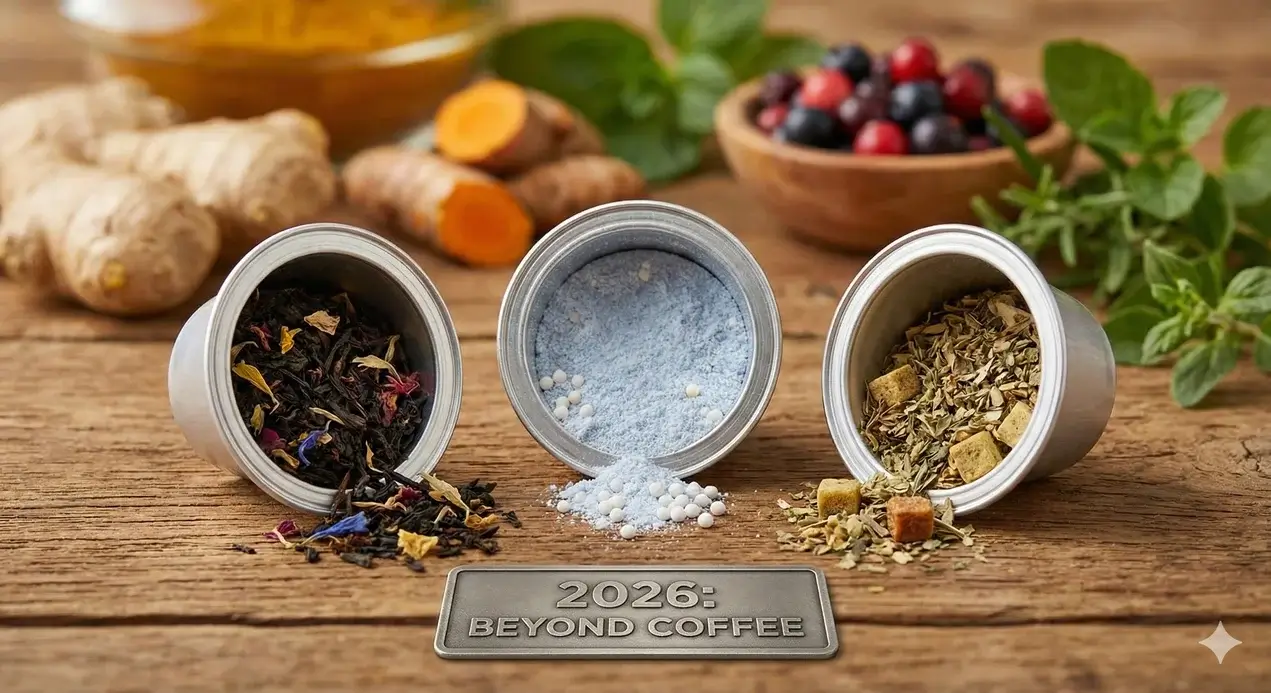
And why 2026 Is a Turning Point for Aluminum Capsules
For more than a decade, aluminum capsules have been associated primarily with one promise: high-quality coffee, brewed quickly and consistently at home. That promise still holds, but it is no longer sufficient. As we approach 2026, consumer expectations around capsules are expanding in ways that fundamentally change their role in the beverage market.
Capsules are no longer viewed simply as a convenient coffee format. They are increasingly understood as a delivery system for a wide range of beverages, experiences, and use cases. Consumers expect their capsule machines to support different moments of the day, different functional needs, and different taste profiles, without sacrificing quality or sustainability. This shift has important implications for brands, especially private-label players who rely on capsules as a fast, scalable route to market.
At the same time, aluminum has emerged as the material best aligned with these new expectations. Its ability to preserve freshness, support premium positioning, and fit within circular economy frameworks makes it particularly suited to a future where capsules must do more than brew espresso. In 2026, aluminum capsules are becoming a strategic product platform rather than a commodity packaging choice.
How is consumer behavior reshaping the capsule landscape, which new beverage categories are gaining traction and what do these changes mean for brands planning their next phase of growth? Let’s explore:
How Are Consumer Expectations Around Capsules Changing in 2026?
Consumer expectations around capsules are shifting from single-purpose convenience toward multi-dimensional value. Convenience still matters, but it is now assumed rather than celebrated. What differentiates capsule products in 2026 is how well they fit into broader lifestyle, sustainability, and quality expectations.
One major change is the normalization of premium at home consumption. Consumers increasingly expect capsule-based beverages to match or closely approximate the quality of specialty cafés. This expectation applies not only to coffee but also to tea, flavored drinks, and functional beverages. As a result, tolerance for inconsistent extraction, flavor degradation or compromised aroma is declining. Capsules are judged less as shortcuts and more as finished products.
Sustainability has also moved from a point of differentiation to a baseline requirement. Many consumers now assume that capsule brands have addressed recyclability, material impact, and waste reduction. Products that fail to meet these expectations face growing skepticism, particularly among younger demographics. Importantly, consumers are becoming more informed. They distinguish between marketing claims and systems that actually work within existing recycling infrastructure.
Another emerging expectation is versatility. Consumers increasingly want one machine and one capsule system to serve multiple needs across the day. Morning energy, afternoon focus, social moments, and evening relaxation are all being mapped to capsule-based beverages. This shift is driving interest in non-coffee formats and hybrid product lines, and it favors capsule solutions that can support diverse ingredients and brewing profiles.
For private-label and emerging brands, these changes raise the bar. Capsules are no longer judged only on price or compatibility, but on whether they support premium experiences, credible sustainability narratives, and future product expansion.
Why Is Aluminum Strengthening Its Position Versus Other Capsule Materials?
As consumer expectations rise, the choice of capsule material is becoming a strategic decision rather than a technical one. In this context, aluminum is strengthening its position not because it is new, but because it aligns more convincingly with what consumers now value most: product integrity, sustainability that feels credible, and premium cues they can trust.
One of aluminum’s key advantages is its performance as a barrier material. Consumers may not always articulate this in technical terms, but they experience it directly through taste consistency, aroma retention, and shelf stability.
As capsule use expands beyond coffee into tea, functional drinks, and flavored beverages, the importance of protecting sensitive ingredients becomes even more critical. Aluminum’s ability to shield contents from oxygen, light, and moisture supports a wider range of beverage formulations without compromising quality over time.
Sustainability is another area where aluminum is regaining ground, particularly as consumer understanding matures. While compostable and bio-based capsules attract attention, many consumers are increasingly aware of the limitations of industrial composting and the lack of appropriate infrastructure in many regions.
Aluminum, by contrast, benefits from existing recycling systems in many markets and a clear circular economy narrative. When communicated transparently, this gives aluminum capsules a level of credibility that alternatives often struggle to match.
There is also a strong perception element at play. Aluminum continues to signal quality and premium positioning in a way that lightweight plastics or fiber-based materials often do not. As capsules become part of visible, lifestyle-oriented consumption, especially in offices, hospitality, and home entertaining, material choice influences how the product is perceived. For brands targeting higher-value segments, aluminum supports a message of seriousness, reliability, and long-term commitment to quality.
From a brand strategy perspective, aluminum also offers flexibility. It can accommodate a broad range of beverage types, sealing technologies, and design finishes without forcing compromises on compatibility or performance. This makes it particularly attractive for private-label brands planning to expand their capsule portfolios over time rather than launching isolated products.
Taken together, these factors explain why aluminum is increasingly seen as the material that best supports premium experiences, credible sustainability, and future-facing product strategies across multiple beverage categories.
How Is Capsule Consumption Expanding Beyond Traditional Coffee?
The most significant shift in the capsule market heading into 2026 is the move away from coffee as the sole or even dominant use case. While coffee remains central, consumers are increasingly treating capsule machines as all-day beverage systems rather than single-purpose appliances. This behavioral change is opening the door to new product categories and redefining how brands think about capsule portfolios.
One driver of this shift is the fragmentation of daily beverage moments. Consumers no longer organize their consumption around a single ritual, such as a morning espresso. Instead, they move through different needs across the day: stimulation, hydration, focus, indulgence, and relaxation. Capsules fit naturally into this pattern because they offer portion control, speed, and consistency. What is changing is the expectation that these benefits should apply to more than coffee.
Tea and herbal infusions are often the first extension. For many consumers, especially those reducing caffeine intake, capsules offer a familiar and controlled way to prepare tea without additional equipment. From there, the range expands into flavored beverages, hot chocolate, and increasingly into functional and wellness-oriented drinks. The capsule format allows brands to introduce these products with relatively low friction, using existing machines and habits.
Another factor is the normalization of premium at-home consumption. As consumers invest in better machines and view capsule systems as long-term fixtures in their kitchens or workplaces, they expect broader functionality. A system that only delivers coffee can start to feel limited, particularly in shared environments such as offices, hotels, wellness centers, or premium retail spaces. Capsules that support multiple beverage types increase the perceived value of both the machine and the brand ecosystem around it.
This expansion beyond coffee also reflects a change in how consumers evaluate brands. Companies that offer a narrow capsule range may be seen as less innovative or less responsive to evolving needs. In contrast, brands that present capsules as a flexible platform for different beverages signal adaptability and relevance. This creates an opportunity for you to move from commodity coffee offerings toward broader beverage strategies without reinventing their infrastructure.
In practical terms, the move beyond coffee is reshaping product development, packaging decisions, and long-term planning. Capsules are no longer optimized solely for espresso extraction. They must accommodate different ingredients, brewing parameters, and sensory expectations. Aluminum capsules, with their stability and versatility, are particularly well suited to this broader role, which is why they are increasingly chosen as the foundation for non-coffee capsule innovation.
This shift marks a transition from capsules as coffee products to capsules as beverage systems, a change that will define how successful brands position themselves in 2026 and beyond.
What New Beverage Categories Are Emerging in Aluminum Capsules?
As capsule consumption expands beyond traditional coffee, several new beverage categories are gaining traction, driven by changing consumer habits and the technical capabilities of aluminum capsules. These categories are not experimental side projects anymore. They are becoming structured product lines with clear demand signals and commercial potential.
Tea and herbal infusions are among the most established extensions. Consumers who already own capsule machines increasingly expect them to support non-coffee options, especially for afternoon and evening consumption. Aluminum capsules perform well in this category because they protect delicate aromas and volatile compounds in tea leaves and botanicals. This allows brands to offer premium loose-leaf style experiences in a controlled, single-serve format, without compromising freshness or shelf life.
Functional and wellness beverages represent one of the fastest-growing capsule categories. These include drinks formulated around specific benefits such as energy balance, focus, immunity, or relaxation. Ingredients like vitamins, minerals, plant extracts, and adaptogens are being introduced into capsule-compatible blends. The appeal lies in precision and convenience. Capsules allow brands to deliver consistent dosing and repeatable experiences, which resonates with consumers who view beverages as part of their daily wellness routines. Aluminum’s barrier properties and a wide seal such as NovoCapsule’s are particularly important here, as many functional ingredients are sensitive to oxygen, moisture, and light.
Indulgent and lifestyle beverages are also expanding rapidly. Hot chocolate, soups, flavored milk-based drinks, and dessert-style beverages are increasingly offered in capsule form, especially for family households, hospitality environments, and offices. These products position capsules not just as functional tools, but as sources of comfort and enjoyment. In this segment, aluminum capsules support both flavor stability and premium presentation, reinforcing the perception of quality even in indulgent formats.
Another emerging category is low- or alternative-caffeine beverages. As consumers become more conscious of caffeine intake, especially later in the day, there is growing demand for capsules that offer gentle stimulation or none at all. This includes decaffeinated coffee alternatives, grain-based drinks, and botanical blends designed for evening use. Capsules make it easy for consumers to switch between these options without changing habits or equipment.
What unites these categories is not novelty, but fit. They integrate seamlessly into existing capsule systems and daily routines. For you, this means that expanding into new beverage types does not require re-educating consumers, only broadening the range of choices available to them.
These emerging categories offer a strategic advantage. They enable portfolio diversification, reduce reliance on a single product type, and open doors to new markets such as wellness, hospitality, and premium retail. Aluminum capsules, with their versatility and performance, provide a stable foundation for building these expanded beverage ranges in a credible and scalable way.
How Are Wellness and Functional Trends Influencing Capsule Product Development?
Wellness is no longer a niche positioning in the beverage market. By 2026, it has become a mainstream expectation that influences how consumers evaluate almost every product category, including capsules. This shift is pushing brands to rethink what a capsule can deliver beyond taste and convenience.
One of the strongest drivers is the integration of beverages into daily health routines. Consumers increasingly use drinks to support specific outcomes such as sustained energy, mental clarity, stress reduction, or immune support.
Capsules fit naturally into this behavior because they offer consistency and predictability. A capsule-based format reassures consumers that they are getting the same formulation, dosage, and experience every time, which is especially important for functional ingredients.
This trend is influencing formulation strategies. Product developers are working with ingredients such as vitamins, minerals, botanical extracts, and adaptogens that require protection from oxidation and moisture. Aluminum capsules play a critical role here by providing a stable environment that preserves ingredient efficacy over time. Compared to more permeable materials, aluminum allows brands to confidently launch functional products with longer shelf lives and fewer compromises on formulation.
Wellness trends are also changing how capsules are positioned throughout the day. Instead of being associated almost exclusively with morning consumption, capsule-based beverages are now mapped to different moments. Energizing blends for the morning, focus-oriented drinks for work hours, and calming or caffeine-free options for the evening are becoming part of a coherent product ecosystem. This day-part approach encourages repeat use and expands consumption occasions without increasing complexity for the consumer.
Another important influence is transparency. Wellness-oriented consumers tend to scrutinize ingredient lists and sourcing claims more closely. This puts pressure on brands to align packaging, messaging, and material choices with the perceived integrity of the product. Aluminum capsules, when paired with clear recycling instructions and credible sustainability communication, support a sense of trust that is essential in the functional beverage space.
The rise of wellness-focused capsules represents a low-friction entry into a high-value segment. Capsules allow for controlled experimentation with functional products, limited runs, and targeted offerings without major changes to production infrastructure. This makes them an effective tool for testing new concepts, validating demand, and scaling successful products.
Use Cases by Channel: Where Non-Coffee Capsule Beverages Are Gaining Traction
As capsules move beyond coffee into tea, soups, broths, and functional drinks, their adoption is being shaped strongly by where they are consumed. Different channels emphasize different benefits, and understanding these distinctions is critical for brands deciding which non-coffee capsule products to develop first.
Offices and Corporate Environments
In offices, capsules solve three persistent challenges: speed, consistency, and inclusivity. While coffee remains essential, not all employees want or can consume caffeine throughout the day. Tea, herbal infusions, and caffeine-free functional drinks extend the usefulness of capsule machines into afternoon hours, reducing reliance on vending machines or external cafés.
Savory capsules, such as vegetable broths or light soups, are beginning to appear in progressive office environments, particularly in tech companies, co-working spaces, and organizations focused on employee wellbeing. These products offer a warm, filling alternative to snacks, without crumbs, odors, or preparation mess. From a facilities perspective, capsule-based soups are hygienic, portion-controlled, and easy to manage, which makes them attractive compared to microwaves or shared kitchen setups.
Hospitality: Hotels, Serviced Apartments, and Premium Accommodation
Hospitality environments place a premium on consistency, guest satisfaction, and operational simplicity. Capsule machines are already common in hotel rooms and lounges, and non-coffee capsules expand their role significantly.
Tea capsules are now expected in many premium accommodations, offering guests familiar choices without kettles or loose-leaf setups. Savory capsules, such as broths or miso-style drinks, are emerging in executive lounges, wellness-focused hotels, and late-night service contexts. They provide comfort options for guests arriving late, fasting travelers, or those seeking light nourishment without room service.
From a brand perspective, aluminum capsules support hospitality needs through durability, shelf stability, and premium presentation. Non-coffee capsules also allow hotels to differentiate their in-room experience without increasing staff workload or food safety complexity.
Wellness Centers, Clinics, and Health-Focused Spaces
Wellness environments are one of the most natural channels for non-coffee capsule adoption. Clinics, spas, gyms, and integrative health centers increasingly offer beverages as part of the overall experience, but require strict control over ingredients, hygiene, and preparation.
Functional teas, herbal blends, and savory broths align well with wellness narratives around hydration, recovery, digestion, and relaxation. Capsule-based delivery ensures precise portions and consistent preparation, which is especially important in medical or therapeutic contexts. Bone broths, mineral-rich vegetable drinks, and collagen-enhanced beverages are particularly well suited to this channel.
This channel favors credibility over novelty. Aluminum capsules reinforce perceptions of safety, quality, and ingredient protection, which are essential in health-adjacent settings.
Co-Working Spaces and Shared Professional Environments
Co-working spaces sit between offices and hospitality, and their beverage needs reflect this hybrid role. Operators look for solutions that are flexible, inclusive, and low-maintenance, while users expect choice and quality.
Non-coffee capsules help operators cater to diverse preferences without expanding infrastructure. Tea, caffeine-free blends, and savory drinks allow spaces to support long working hours, social interactions, and wellness-conscious users. In this context, capsules also become part of the space’s brand identity, signaling care for user experience and modern work culture.
Co-working spaces are valuable testbeds. They expose capsule products to a broad, trend-sensitive audience and generate feedback across multiple use cases within the same environment.
Retail and Premium Gifting Channels
In retail, non-coffee capsules support storytelling and differentiation. Tea assortments, wellness-focused blends, and savory capsule collections are increasingly positioned as lifestyle products rather than everyday commodities.
Giftable formats, curated selections, and limited editions perform particularly well in premium retail and seasonal gifting. Savory capsules, such as broths or soups, stand out in this context because they challenge expectations and feel innovative without being experimental. Aluminum capsules enhance this appeal through visual quality and perceived value.
Retail and gifting channels offer higher margins and branding opportunities, especially when non-coffee capsules are positioned as part of a broader lifestyle ecosystem rather than standalone products.
Home Consumption: Beyond the Morning Coffee
At home, non-coffee capsules extend capsule usage beyond a single ritual. Tea capsules support afternoon and evening routines, while savory and functional drinks align with lighter meals, intermittent fasting, or wellness habits.
Consumers appreciate the familiarity of using the same machine for different needs, and capsules reduce friction compared to preparing soups or teas from scratch. This behavior increases daily interaction with the capsule system and strengthens brand loyalty over time.
Home use reinforces the importance of clear design cues and intuitive portfolios. As households stock multiple capsule types, visual differentiation and clear use-case signaling become essential.
Across all these channels, the same pattern emerges: non-coffee capsules succeed where they reduce complexity, expand choice, and fit seamlessly into existing routines.
What Role Do Design and Aesthetics Play in Capsule Choice Today?
As capsules become more integrated into daily routines and visible consumption moments, design and aesthetics are playing a more influential role in how consumers evaluate and choose products. Capsules are no longer hidden components of a machine-driven process. They are increasingly seen, handled, stored, and even displayed, which elevates their importance as physical brand touchpoints.
For many consumers, the capsule itself has become part of the experience. Color, finish, texture, and form contribute to perceptions of quality before the beverage is even brewed. Aluminum supports this shift particularly well because it allows for precise coloring, premium finishes, and consistent visual identity across product lines. This matters not only in home kitchens, but also in offices, hospitality settings, and wellness spaces where capsules are often visible to guests or clients.
Design is also being used to communicate function and occasion. Capsules are increasingly differentiated by color or visual cues that signal energy, calm, indulgence, or focus. This helps consumers navigate broader portfolios intuitively, without reading detailed labels. As capsule ranges expand beyond coffee, clear visual systems become essential for usability, especially in shared environments where multiple people use the same machine.
Packaging design plays a parallel role. External packaging is expected to reinforce both premium positioning and sustainability values. Minimalist designs, recyclable materials, and restrained use of ink or plastic are becoming more common, reflecting consumer sensitivity to waste and excess. At the same time, packaging must still feel deliberate and high-quality, particularly for brands targeting gifting, subscription, or premium retail channels.
Aesthetics also intersect with brand storytelling. Capsules and their packaging are increasingly used to convey origin stories, functional benefits, or lifestyle positioning. This is especially relevant for private-label brands seeking to move beyond generic offerings. Thoughtful design allows these brands to establish identity, credibility, and emotional resonance without relying solely on brand recognition.
Ultimately, design and aesthetics are no longer secondary considerations in capsule development. They influence perception, usability, and brand differentiation at every stage of the consumer journey.
How Are Brewing Systems and Capsule Technologies Evolving Together?
As capsule-based beverages diversify, brewing systems and capsule technologies are evolving in parallel. This co-evolution is critical. New beverage categories, functional formulations, and premium expectations can only succeed if machines and capsules work together to deliver consistent, reliable results.
One major development is the growing sophistication of brewing systems. Capsule machines are no longer optimized solely for espresso extraction. They are increasingly designed to handle different pressure profiles, water volumes, temperatures, and infusion times. This flexibility allows a single system to support coffee, tea, functional drinks, and indulgent beverages without compromising quality. From the consumer’s perspective, this evolution reinforces the idea that a capsule machine is a multi-purpose appliance rather than a coffee-only device.
Capsule recognition technologies are playing a growing role in this shift. Systems that read capsule identifiers and automatically adjust brewing parameters reduce friction for consumers while protecting product integrity. As portfolios expand, this becomes essential.
Consumers expect intuitive use, even when switching between very different beverage types. Brewing intelligence embedded in machines helps maintain consistency and reduces the risk of poor experiences that could undermine trust in the capsule format.
At the capsule level, technical requirements are becoming more demanding. Capsules must accommodate a wider range of ingredients, grind sizes, and internal structures. They must also perform reliably across different machines and brewing modes. Aluminum capsules are particularly well suited to this challenge because they maintain structural integrity under varying pressure and temperature conditions, which becomes increasingly important as beverages diversify.
Compatibility is another key factor shaping capsule technology. Consumers are increasingly resistant to closed ecosystems that limit choice. This has increased demand for capsules that work reliably across popular machine platforms, especially in private-label and retail-driven markets. For brands, this means capsule design must balance performance optimization with broad compatibility, without sacrificing quality or safety.
The convergence of smarter machines and more advanced capsule designs is redefining expectations around consistency. As consumers use capsules for more than just a quick coffee, tolerance for inconsistency declines. A functional beverage or premium tea capsule that delivers uneven results undermines the entire value proposition. This places greater emphasis on capsule engineering, sealing quality, and material performance.
These developments highlight the importance of long-term thinking. Capsules and machines are no longer separate considerations. Successful product strategies in 2026 and beyond will depend on how well capsule design anticipates brewing system evolution, and how effectively the two are aligned to support new beverage experiences at scale.
How Do Regional Consumer Trends Shape Capsule Innovation Differently?
Although the core drivers of capsule growth are global, regional consumer behavior plays a decisive role in how capsule products are developed, positioned, and adopted. By 2026, successful capsule strategies increasingly reflect an understanding that innovation does not travel unchanged across markets.
In North America, convenience and value remain central, but they are now paired with growing interest in functionality and variety. Consumers are receptive to capsules that support wellness positioning, flavored beverages, and simplified routines, especially in home and office environments. At the same time, price sensitivity remains high, which has accelerated the growth of private-label capsules that deliver acceptable quality at a lower cost. In this market, compatibility and accessibility often outweigh exclusivity, shaping capsule design and portfolio breadth.
European markets tend to emphasize quality, sustainability credibility, and regulatory compliance. Consumers are generally more familiar with espresso-style coffee and more skeptical of superficial environmental claims. This has driven demand for aluminum capsules that integrate cleanly into established recycling systems and support premium taste expectations. In Europe, innovation often focuses less on novelty and more on refinement: better materials, improved sealing, and transparent sustainability communication. Capsule portfolios are expanded carefully, with an emphasis on maintaining product integrity across categories.
The Middle East, particularly markets like the UAE, shows a strong alignment between capsule innovation and lifestyle positioning. Consumers in these markets value premium experiences, visible quality, and brand storytelling. Capsules are often consumed in social or professional settings where aesthetics and perceived status matter. This has encouraged the development of high-end capsule lines, specialty coffee offerings, and visually distinctive designs. There is also growing interest in non-coffee and wellness-oriented capsules, particularly in hospitality, offices, and wellness spaces.
Asia-Pacific markets are characterized by rapid adoption and experimentation. In many countries, capsule machines are still relatively new, and consumers are open to diverse beverage formats. This has accelerated interest in tea capsules, iced beverages, and localized flavor profiles. Convenience is a strong driver, but so is curiosity. Brands entering these markets often use capsules as a way to introduce new consumption habits quickly, adapting products to local tastes while leveraging the familiarity of single-serve formats.
Across all regions, one common thread is the expectation that capsules will adapt to local lifestyles rather than impose a single global model. This underscores the importance of flexibility. Understanding regional dynamics is increasingly critical. Capsule innovation in 2026 is not just about what is possible, but about where and how it resonates. Brands that align capsule strategies with regional consumer realities are far better positioned to scale sustainably and capture long-term value.
How Should You Prepare for the Next Wave of Capsule Innovation?
Preparing for the next phase of capsule innovation requires brands to shift from reactive product launches to structured, forward-looking strategies. By 2026, the pace of change in consumer expectations, beverage categories, and sustainability standards makes ad hoc innovation increasingly risky. Brands that succeed are those that plan for evolution rather than isolated trends.
One essential step is building a clear capsule roadmap that looks beyond coffee. Even brands that intend to remain coffee-focused should design their capsule systems with optionality in mind. This means anticipating future line extensions, whether into functional beverages, teas, or alternative formats, and ensuring that capsule specifications, sealing methods, and sourcing choices can accommodate those additions without major disruption.
Internal alignment is equally important. Capsule strategies touch multiple teams, including product development, marketing, sustainability, procurement, and sales. Preparing for the next wave means ensuring these teams work from shared assumptions about where the capsule category is heading. For example, sustainability commitments must be reflected consistently across material choices, messaging, and supplier relationships. Misalignment here is increasingly visible to consumers and business partners alike.
Brands should also invest in learning from real usage data. Capsule consumption generates predictable, repeatable behavior patterns that can inform innovation decisions. Understanding when and how consumers use different capsules across the day helps brands design more relevant portfolios and avoid overextension. This data-driven approach is particularly valuable for private-label brands that need to optimize every SKU for performance.
Partnership selection is another critical factor. Capsule innovation increasingly depends on close collaboration between brands and capsule manufacturers. Brands benefit from partners that invest in material science, high precision, quality control, and compatibility testing, and that understand the regulatory and logistical implications of scaling across markets. Choosing partners based solely on price often limits innovation capacity later and increases operational risk as portfolios grow more complex.
NovoCapsule invests deeply in material science, sealing performance, and structural integrity, which is essential as capsules expand into tea, functional beverages, and savory applications that place higher technical demands on packaging. Its focus on extra-strong aluminum, wide and reliable sealing areas, and rigorous quality control reduces failure rates and protects brand reputation across markets.
Just as importantly, NovoCapsule is built for scale. It understands regulatory requirements, machine compatibility, and the operational realities of serving multiple regions and channels. We offers private-label brands a future-proof partnership that supports premium positioning, product flexibility, and confident expansion in an increasingly complex capsule landscape.
The next wave of capsule innovation will reward brands that think in systems rather than products. Those that prepare now by building flexible foundations, choosing the right partners, and aligning innovation with real consumer behavior will be able to adapt quickly as the capsule market continues to evolve.
Want to hear more about partnering with us? Leave us your details and our consultants will get back to you shortly.

